

Key Financial Milestones to Reach in Your 20s & 30s
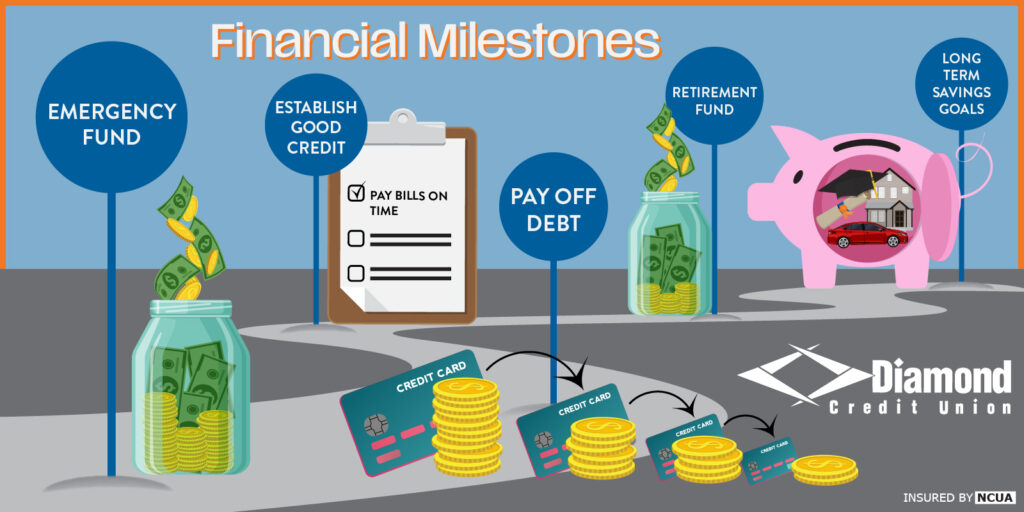
Your 20s and 30s are decades filled with major life changes, starting a career, moving out on your own, beginning a family and making your first big purchases. Alongside these milestones, there are important financial milestone goals that can set the foundation for long-term stability.
Whether you’re just starting out or looking to strengthen your financial footing, focusing on a few core habits early on can set you up for the decades to come. Here are the essential financial milestones to work toward in your 20s and 30s.
The First Financial Milestone: Build an Emergency Fund
One of the first and most critical financial steps is building an emergency fund. Life is unpredictable. Cars break down, medical bills pop up, job situations change, and having a safety net prevents unexpected expenses from spiraling into financial stress. Aim to save at least three to six months’ worth of living expenses in a separate, easily accessible account.
For those just starting out, even saving a small fixed amount each month can build momentum. The key is consistency. An emergency fund protects you from relying on high-interest credit cards or loans, and gives you peace of mind when facing life’s uncertainties.
Establish Good Credit
Your credit score influences far more than you may realize, from loan approvals and interest rates to rental applications and even some job screenings. That’s why establishing good credit during your 20s and 30s is essential.
Start by using credit responsibly: make on-time payments, keep balances low, and avoid taking on more debt than you need. Over time, strong credit habits will help you qualify for better financial opportunities, lower borrowing costs, and greater flexibility when making major purchases like a home or car.
Pay Off High-Interest Debt
Carrying high-interest debt, especially from credit cards, can limit your ability to reach future financial goals. That’s why paying off debt is a major milestone during your 20s and 30s. Start by listing all debts. Whether you choose the avalanche method (tackling high-interest balances first) or the snowball method (starting with the smallest balances), the most important thing is to stick to a strategy.
Eliminating debt not only frees up more of your income each month, but also reduces financial stress and strengthens your long-term financial stability.
Start a Retirement Fund Early
Even if retirement feels far away, your 20s and 30s are the best time to start saving for the future. Thanks to compound interest, the earlier you begin, the more your money grows over time. Whether through an employer-sponsored 401(k), an IRA, or both, prioritizing establishing a retirement fund can significantly impact your financial security later in life.
If your employer offers a 401(k) match, make it a goal to contribute at least enough to receive the full match. From there, gradually increase your contributions as your income grows. Small increases today can lead to major growth over the next several decades.
Set Long-Term Savings Goals
Beyond retirement, your financial future includes other major milestones like buying a home, starting a family, traveling or launching a business. Achieving these dreams begins with having long-term savings goals. Take time to define what you want over the next 5, 10, or 20 years, then create a plan to save for them.
Automate your savings whenever possible, track your progress and revisit your goals as your life evolves. Long-term planning helps you stay focused, intentional, and prepared for the opportunities ahead.
Reaching these financial milestones in your 20s and 30s builds a strong foundation for the decades to come. With thoughtful planning, good habits and a commitment to your goals, you can create long-term stability, and the freedom to pursue the future you envision.
If you need assistance with budgeting or getting started on these financial milestones, we are here to help. We have HERO financial counselors who are certified in budgeting and money management. Schedule an appointment to get started.