


Do I Need an HSA? A Simple Guide to Health Savings Accounts
If you are covered by a high-deductible health plan (HDHP), you might not know about one of the most useful financial tools available: a Health Savings Account (HSA).
Created by Congress in 2003, HSAs were established to meet a growing need for tax-preferred savings plans. They are specifically designed to help individuals plan for, manage, and afford out-of-pocket medical expenses. But you might be wondering, “Do I need an HSA?”
To answer that, it helps to understand health savings account basics, how the rules have been updated for 2026, and why financial experts frequently call them the ultimate retirement safety net.
What is an HSA?
An HSA is essentially a personal savings account exclusively for medical expenses. Unlike your standard health insurance, this account is solely owned by you, not your employer or your insurance provider.
You determine how much money is automatically deposited into your HSA directly from each paycheck, up to the annual HSA contribution limits. For 2026, the maximum you can contribute is $4,400 for self-only coverage and $8,750 for family coverage (with an additional $1,000 catch-up contribution allowed if you are age 55 or older).
Health Savings Account Pros and Cons
When weighing HSA eligibility requirements, it’s important to look closely at how these accounts operate. Understanding the full picture means looking at both the massive perks and the strict rules.
The Requirements and the Catch
To open and contribute to an HSA, you must be enrolled in a qualifying High-Deductible Health Plan (HDHP). These plans feature lower monthly premium rates, meaning less money leaves your paycheck each month. However, the flip side is a higher deductible, which is the amount you must spend out-of-pocket before your insurance kicks in.
For 2026, the IRS defines a qualifying HDHP as having:
- Self-only coverage: A minimum deductible of $1,700 (with an out-of-pocket maximum capped at $8,500).
- Family coverage: A minimum deductible of $3,400 (with an out-of-pocket maximum capped at $17,000).
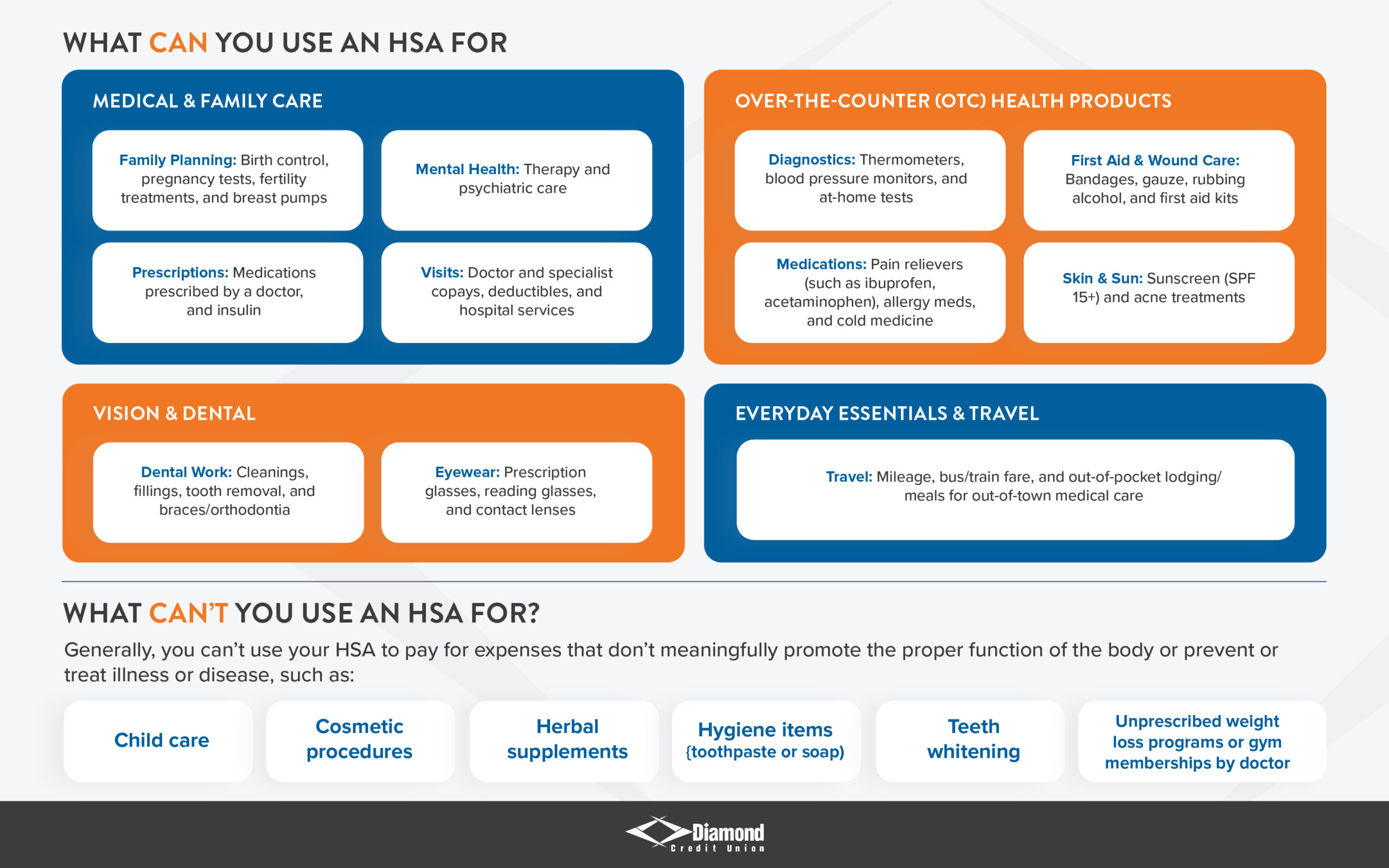
There are a few notable health savings account disadvantages to keep in mind. Because these accounts enjoy steep tax perks, the IRS strictly enforces how the money is spent. You can only use it for HSA-qualified medical expenses, such as doctor visits, prescriptions, and dental care. If you make non-eligible, non-medical purchases using your HSA funds before age 65, you’ll face regular income tax on that amount plus a 20% tax penalty.
Top 3 Reasons Why an HSA is Beneficial
Below, we break down exactly how these distinct advantages work and how you can leverage them to maximize your financial health.
1. The HSA Triple Tax Advantage
The primary reason HSAs are so highly recommended is their unmatched tax structure. They are widely considered the most tax-favored accounts in the United States because they offer an HSA tax benefits trifecta:
- Pre-Tax Contributions: If you contribute through payroll deductions, those pre-tax dollars directly lower your taxable income. If you contribute on your own, the funds are 100% tax-deductible—and you do not need to itemize deductions on your tax return to claim them. Furthermore, any employer contributions are also completely excluded from your gross income.
- Tax-Deferred Growth: Any interest or investment earnings your account accumulates grow completely free from federal income tax. You pay absolutely zero taxes on your gains while the assets remain inside the account.
- Tax-Free Withdrawals: When you use your HSA funds to pay for qualified medical expenses, your withdrawals are entirely tax-free. You can pull funds out at any time without a penalty to cover eligible healthcare costs.
2. An HSA Never Expires (And It Belongs to You)
Unlike a Flexible Spending Account (FSA), which famously operates on a restrictive “use-it-or-lose-it” annual deadline, HSA funds roll over indefinitely, a massive HSA vs FSA difference. Your balance stays intact year after year, building a robust safety net for future healthcare needs.
Even better, your HSA is portable. It is yours to keep forever, even if you switch jobs, alter your career path, or retire. As long as you maintain an HSA-eligible HDHP, you can keep contributing to it. Even if you switch to a traditional health plan later, you cannot add new money, but you can freely spend the existing balance tax-free on medical bills.
While HSAs enjoy incredible federal tax breaks, state laws vary. For instance, if you are filing an HSA Pennsylvania return, you’ll be glad to know that PA generally mirrors the federal tax exemptions for HSA contributions and growth on state income taxes, unlike states like California or New Jersey, which tax them.
3. Your HSA Can Support Your Retirement
If you are fortunate enough to cover your current, day-to-day medical bills out-of-pocket, you can treat your HSA as a supplemental asset for retirement planning.
Most HSA custodians allow you to invest your balance into share certificates of deposit, stocks, bonds, mutual funds, or exchange-traded funds (ETFs) once you cross a minimum cash balance. Especially for those in their 20s and 30s, compounding interest over several decades can turn an HSA into a massive healthcare nest egg for your golden years.
What happens at age 65?
Once you hit age 65, the rules shift in your favor. You can withdraw HSA dollars for any non-medical expense without facing the 20% penalty. At that point, any non-medical withdrawals are simply taxed as ordinary income, effectively acting exactly like a traditional IRA or 401(k). If you do use it for medical expenses in retirement, it remains tax-free.
If you are already maxing out your traditional retirement vehicles, your HSA serves as the perfect secondary account for long-term wealth building.
The Verdict: Is an HSA Worth It?
If you prefer low monthly premium options and are comfortable managing a higher deductible, an HSA can be one of the smartest financial moves you can make. It transforms unavoidable healthcare spending into an aggressive, tax-sheltered wealth-building strategy.
Ready to explore your options or open your HSA account? Diamond has various options to accommodate your HSA needs including checking accounts, money market savings accounts, and share certificates of deposit. Schedule an appointment with a Diamond team member today!