

• Appointments
  • Contact Us
  • Become A Member
  • Business

Click here to vote on Diamond Credit Union’s proposed charter enhancement. Voting closes April 28, 2026. Your unique election ID can be found in an email that was sent on March 30, 2026, from CU Ballot.

That's Younity.
Digital Banking Login
Forgot Username? Forgot Password? Unlock Account Not signed up? Enroll Now
  • Personal
    • Checking Accounts
    • VISA® Debit
    • VISA® Credit
    • Teen Debit Account
    • Savings Accounts
      • Money Market Accounts
      • Health Savings Accounts
      • Share Certificates
      • IRA
    • Mobile & Online Banking
    • Branches, ATMs & Appointments
    • Insurance
    • HERO Financial Counseling
  • Loans & Credit
    • Vehicle Loans
      • Auto Buyer’s Guide
      • Shop Enterprise Car Sales
    • Personal Loans
      • Personal Loans and Line of Credit
      • Credit Builder Loan
    • VISA® Credit
    • Smart Option Student Loan®
    • Rates
    • Pay Loans Online
    • Credit & Financial Review
  • Home & Mortgage
    • Home Equity Loans
    • Mortgage Team
    • Mortgage Guide & Apply
    • Rates
    • First-Time Homebuyer 101
    • Pay Your Mortgage
  • Financial Planning
    • Team & Appointments
    • Client Login
    • DFP Website
    • Guided Wealth Portfolios
  • About Us
    • Younity
    • Eligibility
    • ATM & Branch Locations
    • Careers & Internships
    • Annual Reports & Board Election
    • Community Involvement
      • Scholarships
      • Golf Tournament
      • Charitable Foundation
      • Calendar of Events
    • Mystery Shoppers
    • Contact Us
  • Learn
    • Blog
    • Diamond Youniversity
    • Zogo Financial Education App
  • Tools & Resources
    • Calculators
    • Account Management Tools
    • FAQs
    • Transfer Funds
    • Financial Safety & Security
That's Younity.
Digital Banking Login
Forgot Username? Forgot Password? Unlock Account Not signed up? Enroll Now
  • Personal
    • Checking Accounts
    • VISA® Debit
    • VISA® Credit
    • Teen Debit Account
    • Savings Accounts
      • Money Market Accounts
      • Health Savings Accounts
      • Share Certificates
      • IRA
    • Mobile & Online Banking
    • Branches, ATMs & Appointments
    • Insurance
    • HERO Financial Counseling
  • Loans & Credit
    • Vehicle Loans
      • Auto Buyer’s Guide
      • Shop Enterprise Car Sales
    • Personal Loans
      • Personal Loans and Line of Credit
      • Credit Builder Loan
    • VISA® Credit
    • Smart Option Student Loan®
    • Rates
    • Pay Loans Online
    • Credit & Financial Review
  • Home & Mortgage
    • Home Equity Loans
    • Mortgage Team
    • Mortgage Guide & Apply
    • Rates
    • First-Time Homebuyer 101
    • Pay Your Mortgage
  • Financial Planning
    • Team & Appointments
    • Client Login
    • DFP Website
    • Guided Wealth Portfolios
  • About Us
    • Younity
    • Eligibility
    • ATM & Branch Locations
    • Careers & Internships
    • Annual Reports & Board Election
    • Community Involvement
      • Scholarships
      • Golf Tournament
      • Charitable Foundation
      • Calendar of Events
    • Mystery Shoppers
    • Contact Us
  • Learn
    • Blog
    • Diamond Youniversity
    • Zogo Financial Education App
  • Tools & Resources
    • Calculators
    • Account Management Tools
    • FAQs
    • Transfer Funds
    • Financial Safety & Security
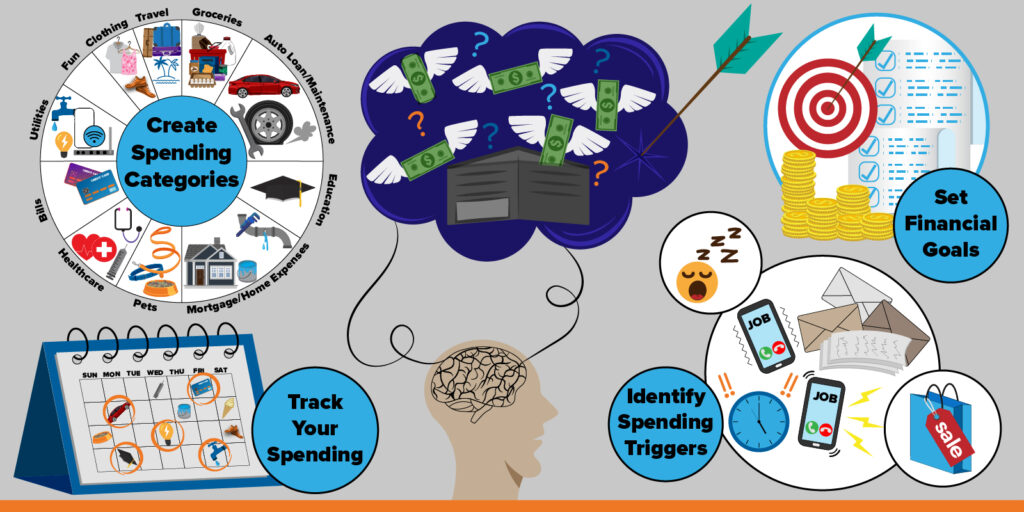
This is a graphic that represents the blog that is about money anxiety and financial wellness. There is a wheel with different spend categories such as fun, wellness, bills and groceries. Then a human with a storm cloud above their head.

Understanding Money Anxiety: How to Build Better Spending Habits

Index

  • Why Money Anxiety Happens
  • The Impact of Emotional Spending
  • How to Spend More Intentionally
    • Here are a few strategies that can help:
  • How to Stop Stressing About Money
    • Building Long-Term Financial Wellness

For many people, money isn’t just about numbers, it’s connected to emotions. Worrying about bills, feeling guilty after a purchase, or constantly wondering if you’re saving enough can all contribute to money anxiety. When stress and finances become closely linked, it can be difficult to feel confident in your financial decisions. The good news is that by understanding your spending habits and making more intentional choices, you can begin to build a healthier relationship with money.

Why Money Anxiety Happens

Money anxiety often stems from uncertainty or feeling like your finances are out of control. Unexpected expenses, rising costs, or simply not knowing where your money goes each month can all contribute to financial stress.

This is where behavior economics comes into play. Behavior economics looks at how emotions, habits, and psychological patterns influence the way people make financial decisions. While we might think spending is purely logical, many purchases are actually influenced by feelings such as stress, excitement, or even boredom.

Recognizing these emotional triggers is an important first step toward improving your money mindset and developing healthier spending habits.

The Impact of Emotional Spending

One common challenge is emotional spending. This is when you buy things in response to feelings rather than genuine needs. For example, someone might shop online after a stressful day or treat themselves to expensive items as a way to feel better.

While these purchases may offer temporary relief, they can often increase stress and finances in the long run. Seeing a higher credit card balance or realizing you spent more than planned can quickly bring those anxious feelings back.

Learning to pause and ask yourself why you want to make a purchase can help interrupt this cycle. Sometimes simply waiting 24 hours, or even a week before buying something can help determine whether it’s truly necessary.

How to Spend More Intentionally

Intentional spending doesn’t mean you can’t enjoy your money, it simply means making thoughtful decisions that align with your priorities.

Here are a few strategies that can help:

Track Your Spending

Start by reviewing where your money is going each month. Even small purchases can add up quickly, and seeing the full picture can help you make adjustments.

Create Spending Categories

Instead of thinking about a budget as a restriction, think of it as a plan for what matters most to you. This shift can improve your overall money mindset. Create categories to help you decide where your money will go. Some examples include bills, groceries, cosmetics, clothing, travel, etc.

Identify Spending Triggers

If you notice patterns of emotional spending, try replacing the habit with something else, such as taking a walk, calling a friend, or focusing on a hobby.

Set Financial Goals

Working toward goals like building an emergency fund or paying down debt can provide a sense of progress and control.

How to Stop Stressing About Money

If you’re wondering how to stop stressing about money, the answer often starts with small, consistent changes. Building positive financial habits takes time, but every step can reduce uncertainty and help you feel more confident about your future.

Creating a simple plan for spending, saving, and paying bills can significantly reduce financial anxiety. When you know your priorities and have a strategy in place, financial decisions tend to feel less overwhelming.

Building Long-Term Financial Wellness

Learning how to deal with financial anxiety isn’t about being perfect with money. Instead, it’s about understanding your habits, recognizing emotional influences, and making intentional choices that support your goals.

If you’re looking for more guidance when it comes to your financial wellness, you can always schedule an appointment with one of our certified HERO Financial Counselors. They’re trained to help you develop a budget so that you can meet and exceed your financial goals.

Index

  • Why Money Anxiety Happens
  • The Impact of Emotional Spending
  • How to Spend More Intentionally
    • Here are a few strategies that can help:
  • How to Stop Stressing About Money
    • Building Long-Term Financial Wellness

Notice

You are leaving Diamond Credit Union website. Clicking proceed will take you to a website that Diamond may not be affiliated with and may not represent the views of the credit union.

That's Younity.
  • About Us
  • ATM & Branches Locations
  • FAQs
  • Contact Us
  • Card Emergencies
Disclaimer for being federally insured through NCUA.
A logo for equal housing opportunity.

Equal Housing Opportunity.

Your savings federally insured to at least $250,000 and backed by the full faith and credit of the United States Government by the National Credit Union Association, a US Government Agency.

Local Phone Number: 610-326-5490
Toll Free Phone Number: 800-593-1000
Routing Number: 231385154
  • Third Party Notice
  • Privacy Policy
  • Sitemap
  • Browser Compatibility